Ingredients
Method
- Prepare the catfish: Rinse the fillets under cold running water and pat them thoroughly dry with paper towels. Place them on a plate and season both sides lightly with a pinch of salt. You'll notice the fish feels firm and moist to the touch, with a clean, briny scent of fresh water.
- Create the buttermilk soak: In a shallow bowl, whisk together the buttermilk and egg until the mixture is pale yellow and completely smooth, with no streaks of egg white remaining. The liquid should have a slightly thick, creamy consistency.
- Prepare the seasoned coating: In a separate shallow dish, combine the cornmeal, flour, salt, black pepper, garlic powder, onion powder, cayenne (if using), and paprika. Stir with a fork until the spices are evenly distributed throughout the dry mix. The cornmeal will give the mixture a warm golden hue, and you'll smell the earthy, slightly sweet aroma of the paprika.
- First dredge: Take each fillet and dip it into the seasoned cornmeal mixture, pressing gently so the coating adheres evenly. Shake off any excess. At this stage, the fillet will have a thin, sandy-looking coating that feels dry to the touch.
- Buttermilk bath: Submerge the coated fillet into the buttermilk-egg mixture, turning to coat completely. Let it sit for 2-3 minutes. The coating from the first dredge will soften slightly, creating a tacky surface that will grip the second layer of coating.
- Second dredge: Lift the fillet from the buttermilk, allowing any excess to drip off, and place it back into the seasoned cornmeal mixture. Coat thoroughly, pressing gently to build up a thick, even crust. You should see a substantial, pebbly coating that completely hides the fish underneath. Place the coated fillets on a wire rack and let them rest for 15 minutes. This resting period is crucial—it allows the coating to set and adhere firmly, preventing it from slipping off during frying.
- Heat the oil: Pour vegetable oil into a large, heavy-bottomed frying pan or skillet to a depth of about 2-3cm. Heat over medium-high heat until the oil reaches 175°C (350°F). If you don't have a thermometer, test the oil by dropping a pinch of the cornmeal mixture into it—it should sizzle immediately and rise to the surface, turning golden brown within 30 seconds. The oil will shimmer and you'll feel the heat radiating from the pan.
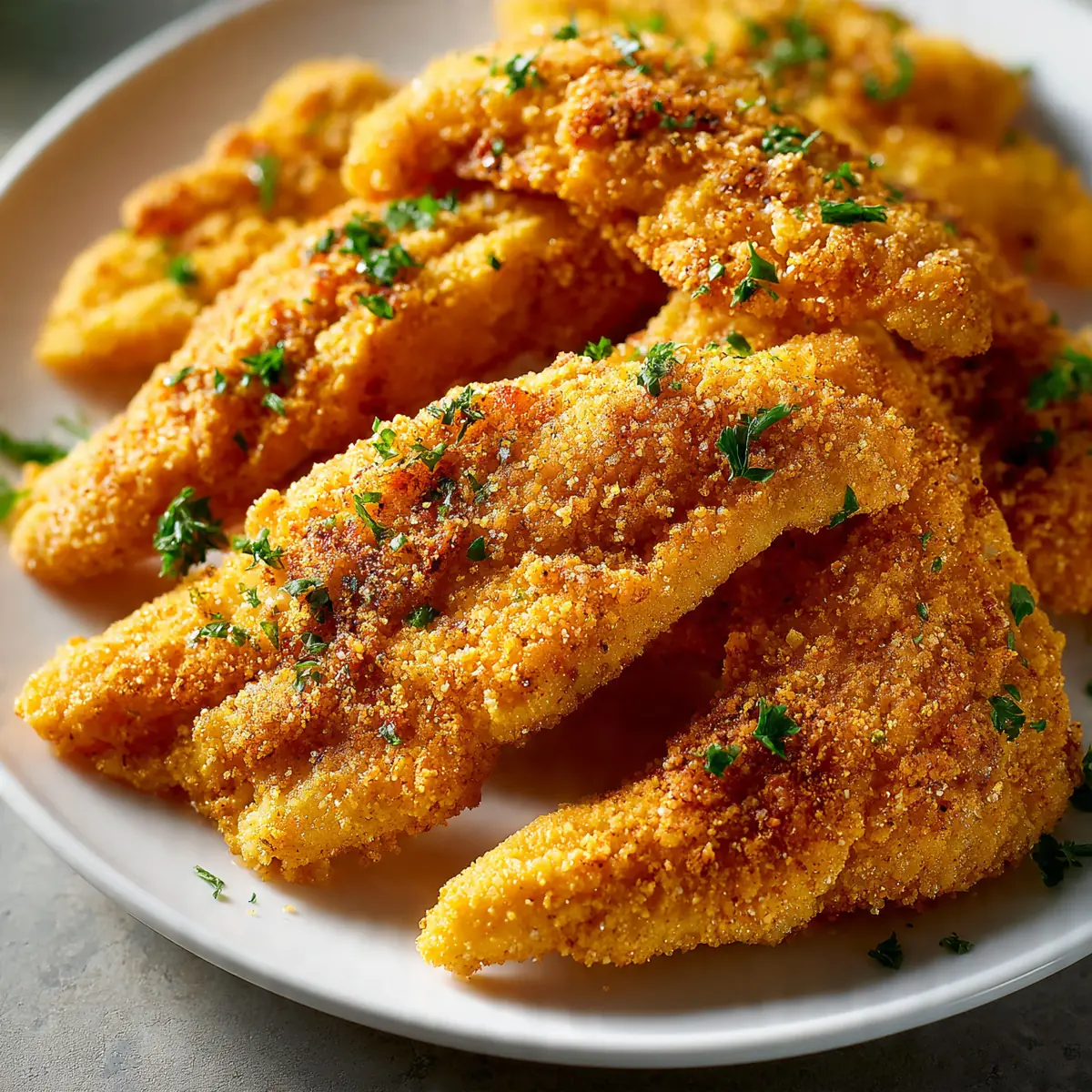
- Fry the catfish: Carefully lower 2 fillets into the hot oil, laying them away from you to avoid splashing. The oil will bubble vigorously around the fish, and you'll hear a satisfying sizzle. Fry for 4-5 minutes on the first side, until the underside is a deep, rich golden brown and the edges look crispy. You'll see the crust darken from pale yellow to a warm amber colour. Using a slotted spatula, carefully flip each fillet. The cooked side should feel firm and sound hollow when tapped with the spatula. Fry for another 3-4 minutes on the second side, until the internal temperature of the fish reaches 63°C (145°F) and the crust is evenly browned all over. The fish will look puffed and crisp, with some of the cornmeal creating small, crunchy nubs on the surface.
- Drain and rest: Transfer the fried fillets to a wire rack set over a baking sheet (not paper towels, which can trap steam and soften the crust). Let them drain for 2-3 minutes. The fish will release a slight amount of oil as it rests, and the crust will continue to crisp up. The aroma at this point is irresistible—warm cornmeal, savoury spices, and delicate, sweet fish.
- Finish and serve: Repeat the frying process with the remaining two fillets. Serve the catfish immediately while it's still hot and crunchy, with lemon wedges on the side for squeezing over the top.
Notes
Resting the coated fillets for 15 minutes before frying helps the crust adhere. Use a thermometer to maintain oil at 175°C (350°F). Drain on a wire rack, not paper towels, to keep the crust crispy.