Beef Kbbeh (Middle Eastern Meatballs)
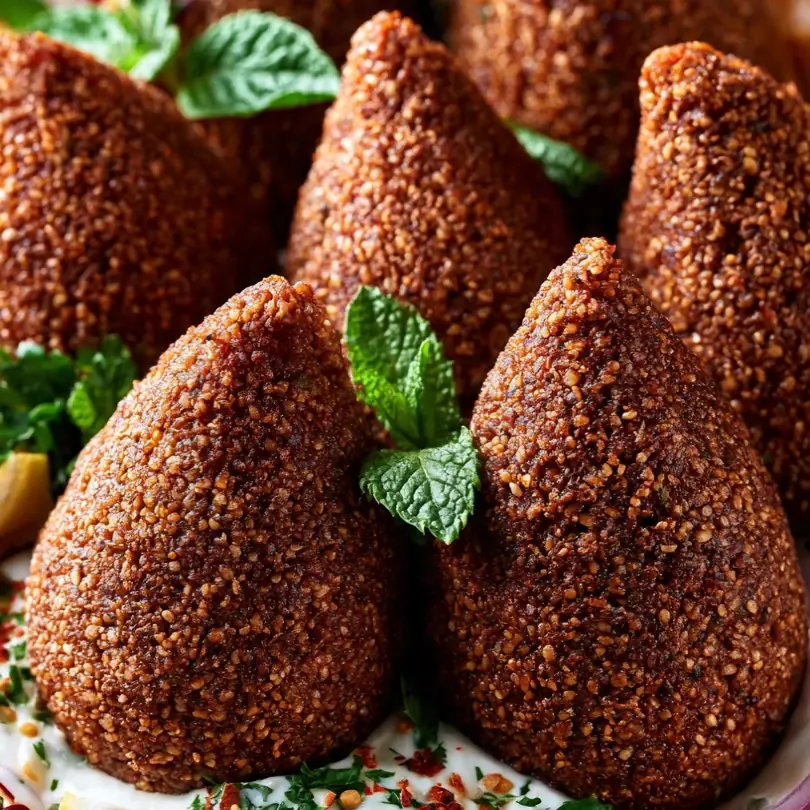
This recipe for Beef Kbbeh (Middle Eastern Meatballs) is my go-to when I want a deeply savoury, satisfying meal that feels special but comes together with confidence. Let me show you how to make these beautiful, bulgur-crusted meatballs with a spiced beef filling.
Recipe Overview
- Prep Time: 45 minutes
- Cook Time: 30 minutes
- Total Time: 1 hour 15 minutes
- Servings: 4-6 people
- Difficulty: Medium
Why You’ll Love This Beef Kbbeh (Middle Eastern Meatballs)
- Authentic flavour from scratch: The combination of fine bulgur, lean beef, and warm spices like allspice and cinnamon creates a taste that takes you straight to a bustling Middle Eastern kitchen.
- A rewarding technique to master: Shaping the kbbeh around a filling feels like a small craft project, and the pride when you see that perfectly sealed, golden-brown ball is immense.
- Make-ahead friendly: You can prepare and shape the meatballs a day in advance, then simply fry them when you’re ready to eat. This makes them brilliant for entertaining.
- Naturally satisfying: Packed with protein from the beef and fibre from the bulgur wheat, these meatballs are hearty enough to be a main course alongside a fresh salad or yoghurt.
- Versatile serving options: Serve them in a rich tomato broth, as part of a mezze spread, or with a simple garlic yoghurt sauce for dipping.
Ingredients You’ll Need
- 200g fine bulgur wheat
- 500g lean beef mince (for the shell)
- 1 large onion, grated
- 1 teaspoon ground allspice
- ½ teaspoon ground cinnamon
- ½ teaspoon ground black pepper
- 1½ teaspoons salt
- 300g beef mince (for the filling)
- 1 small onion, finely diced
- 2 tablespoons pine nuts
- 1 tablespoon tomato paste
- ½ teaspoon ground cumin
- Vegetable oil for frying
Tip: Fine bulgur wheat is essential here; the coarse variety will not bind properly with the meat. You can find fine bulgur in most supermarkets or Middle Eastern grocers.
How to Make Beef Kbbeh (Middle Eastern Meatballs)
- Prepare the bulgur: Place the fine bulgur wheat in a bowl and pour over 200ml of warm water. Let it sit for 15 minutes. You will notice the grains swell and soften, and the water will be fully absorbed. The bulgur should feel tender when you pinch it between your fingers.
- Make the shell mixture: In a large bowl, combine the softened bulgur with 500g beef mince, the grated onion, allspice, cinnamon, pepper, and 1 teaspoon of salt. Use your hands to knead the mixture for 5 minutes. The texture will change from crumbly to a smooth, cohesive dough that feels slightly sticky but holds together firmly when pressed. You should hear a slight squelch as you work it.
- Cook the filling: Heat a tablespoon of oil in a frying pan over a medium heat. Add the finely diced onion and cook for 3-4 minutes until it turns translucent and smells sweet. Add 300g beef mince and break it up with a wooden spoon. Cook until the meat is browned and no longer pink, about 5-6 minutes. The sizzling will subside as the water evaporates, and the meat will begin to fry in its own fat. Stir in the pine nuts, tomato paste, cumin, and remaining ½ teaspoon salt. Cook for another 2 minutes until the mixture is aromatic and slightly dry. Let it cool completely.
- Shape the kbbeh: Wet your hands with a little cold water to prevent sticking. Take a golf-ball-sized piece of the shell mixture (about 40g) and roll it into a smooth ball. Hold it in your palm and use your other hand’s index finger to gently poke a hole into the centre, working your finger around to create a thin-walled cup. The shell should be about ½ cm thick. Spoon about a teaspoon of the cooled filling into the cavity. Gently pinch the opening closed, shaping it into a neat oval or torpedo shape. Smooth any cracks with damp fingers. Repeat with the remaining mixture. You should have about 16-18 kbbeh.
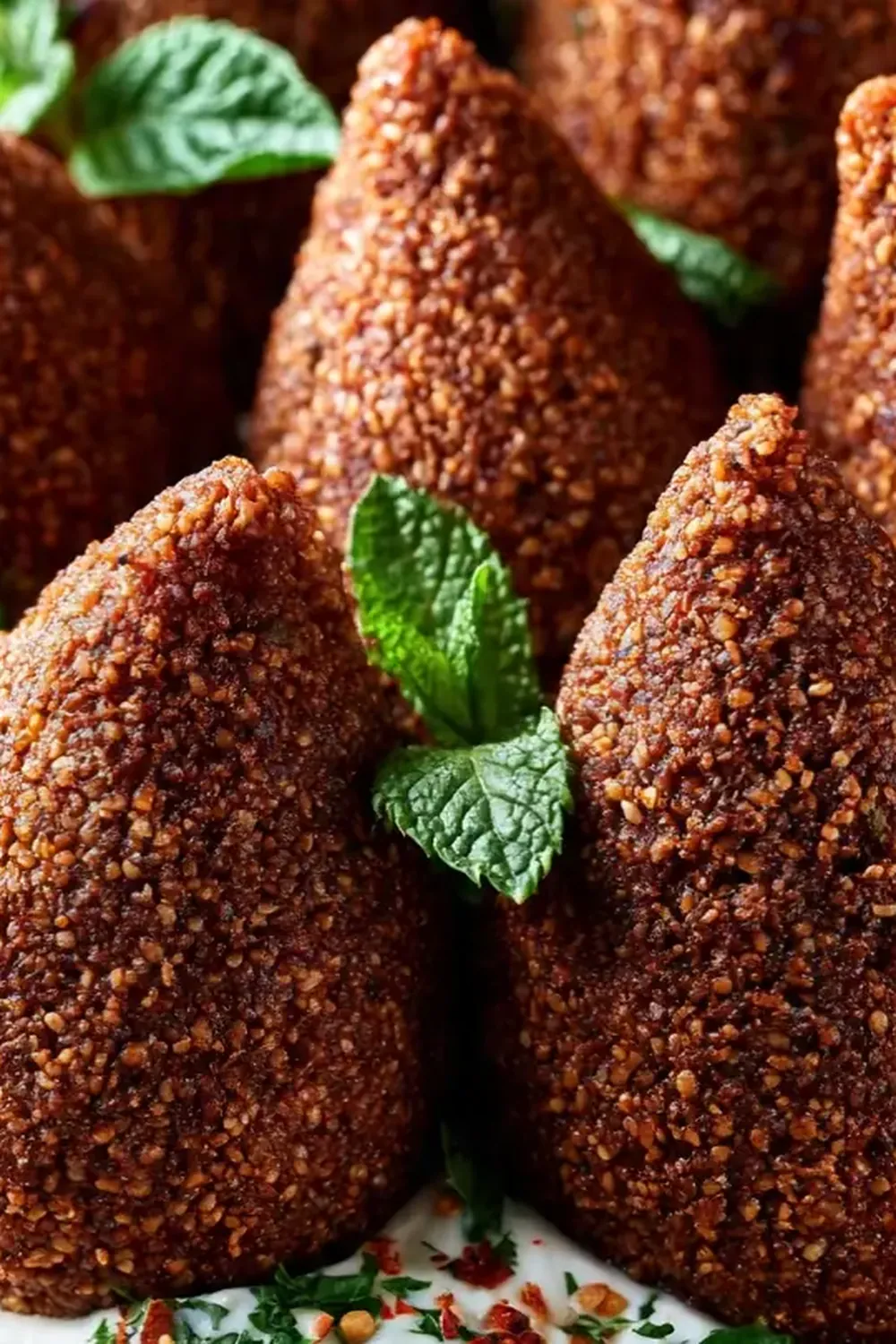
- Fry the meatballs: Pour oil to a depth of 2cm into a large, deep frying pan and heat over a medium-high flame. The oil is ready when a small piece of the shell mixture sizzles vigorously upon contact. Carefully place 6-8 kbbeh into the hot oil, ensuring not to overcrowd the pan. Fry for 4-5 minutes, turning occasionally, until they are a deep, rich golden brown on all sides. The crust should feel crisp and the kitchen will fill with a wonderful nutty, spiced aroma. Drain on paper towels.
- Serve immediately: Transfer the golden kbbeh to a serving platter. They are best eaten hot, while the shell is still crisp and the filling is piping hot inside.
Tips From My Kitchen
- Soak the bulgur properly: Don’t rush this step. The bulgur needs to be fully hydrated to act as a binder. If it’s too dry, your shell will crack during frying. After soaking, squeeze a handful; it should hold its shape without dripping water. This ensures the texture of the shell will be tender, not gritty.
- Grate, don’t chop, the onion for the shell: Grated onion releases more moisture than diced onion, which helps bind the bulgur and meat. It also incorporates more evenly into the mixture, so you don’t get chunks of raw onion. After grating, squeeze the excess liquid out over the sink to avoid making the shell too wet.
- Chill the shell mixture if it feels too soft: If your kitchen is warm, the fat from the mince can make the shell mixture feel loose and difficult to shape. Pop it in the fridge for 20 minutes. The cold firms up the fat, making the mixture much easier to handle and shape without it sticking to your hands.
- Keep your hands wet while shaping: This is the single most important technique I discovered. Dip your hands in a bowl of cold water between shaping each kbbeh. The water creates a barrier between the meat mixture and your skin, preventing sticking and allowing you to smooth out any cracks seamlessly. It also helps keep the shell from warming up too much.
- Don’t skip cooling the filling: A hot or even warm filling will begin to cook the raw shell from the inside out as you shape the kbbeh, making it soft and difficult to seal. It can also cause the kbbeh to burst open in the oil. Always let the filling come to room temperature completely before you start assembling.
- Test the oil temperature with a breadcrumb: The ideal frying temperature is around 170°C. If the oil is too cool, the kbbeh will absorb oil and become greasy. If it’s too hot, the outside will burn before the inside is cooked through. Drop a tiny piece of the shell mixture into the oil; it should immediately sizzle and rise to the surface, turning golden in about 45 seconds.
Equipment You’ll Need
- Large frying pan or skillet
- Sharp knife and cutting board
- Mixing bowls
- Wooden spoon or spatula
- Box grater
- Measuring cups and spoons
- Paper towels for draining
Delicious Variations to Try
- Spicy Version: Add 1 finely chopped red chilli to the filling along with ½ teaspoon of chilli flakes. You can also stir a teaspoon of harissa paste into the shell mixture for a gentle, warming heat that builds with each bite.
- Vegetarian/Vegan Option: Replace the beef mince in both the shell and filling with a mixture of cooked lentils and finely chopped mushrooms. For the shell, use 400g of blended chickpeas (from a tin, drained) mixed with the bulgur. The texture will be slightly different but still deliciously satisfying.
- Different Protein: Lamb mince works beautifully in this recipe, bringing a richer, slightly gamey flavour that pairs wonderfully with the allspice and cinnamon. You can also use a mix of beef and lamb for the filling alone to add depth.
What to Serve With Beef Kbbeh (Middle Eastern Meatballs)
- A generous dollop of garlic yoghurt sauce or labneh
- A bright, herby tabbouleh salad or fattoush
- Warm flatbread or pita to scoop up every bite
- A simple cucumber and tomato salad with lemon juice
Frequently Asked Questions
Beef Kbbeh (Middle Eastern Meatballs)
Ingredients
Method
- Prepare the bulgur: Place the fine bulgur wheat in a bowl and pour over 200ml of warm water. Let it sit for 15 minutes. You will notice the grains swell and soften, and the water will be fully absorbed. The bulgur should feel tender when you pinch it between your fingers.
- Make the shell mixture: In a large bowl, combine the softened bulgur with 500g beef mince, the grated onion, allspice, cinnamon, pepper, and 1 teaspoon of salt. Use your hands to knead the mixture for 5 minutes. The texture will change from crumbly to a smooth, cohesive dough that feels slightly sticky but holds together firmly when pressed. You should hear a slight squelch as you work it.
- Cook the filling: Heat a tablespoon of oil in a frying pan over a medium heat. Add the finely diced onion and cook for 3-4 minutes until it turns translucent and smells sweet. Add 300g beef mince and break it up with a wooden spoon. Cook until the meat is browned and no longer pink, about 5-6 minutes. The sizzling will subside as the water evaporates, and the meat will begin to fry in its own fat. Stir in the pine nuts, tomato paste, cumin, and remaining ½ teaspoon salt. Cook for another 2 minutes until the mixture is aromatic and slightly dry. Let it cool completely.
- Shape the kbbeh: Wet your hands with a little cold water to prevent sticking. Take a golf-ball-sized piece of the shell mixture (about 40g) and roll it into a smooth ball. Hold it in your palm and use your other hand's index finger to gently poke a hole into the centre, working your finger around to create a thin-walled cup. The shell should be about ½ cm thick. Spoon about a teaspoon of the cooled filling into the cavity. Gently pinch the opening closed, shaping it into a neat oval or torpedo shape. Smooth any cracks with damp fingers. Repeat with the remaining mixture. You should have about 16-18 kbbeh.
- Fry the meatballs: Pour oil to a depth of 2cm into a large, deep frying pan and heat over a medium-high flame. The oil is ready when a small piece of the shell mixture sizzles vigorously upon contact. Carefully place 6-8 kbbeh into the hot oil, ensuring not to overcrowd the pan. Fry for 4-5 minutes, turning occasionally, until they are a deep, rich golden brown on all sides. The crust should feel crisp and the kitchen will fill with a wonderful nutty, spiced aroma. Drain on paper towels.
- Serve immediately: Transfer the golden kbbeh to a serving platter. They are best eaten hot, while the shell is still crisp and the filling is piping hot inside.
Notes
I hope you give these Beef Kbbeh (Middle Eastern Meatballs) a try. They are one of those dishes that feels like a real accomplishment, and the aroma alone will have everyone gathering in the kitchen. If you enjoyed this recipe, you might also love my Healthy Baked Chicken Shawarma Wraps or this vibrant Greek Chicken Salad With Hummus Dressing for another taste of the region. I’d love to hear how your kbbeh turn out—please leave a comment below and let me know!